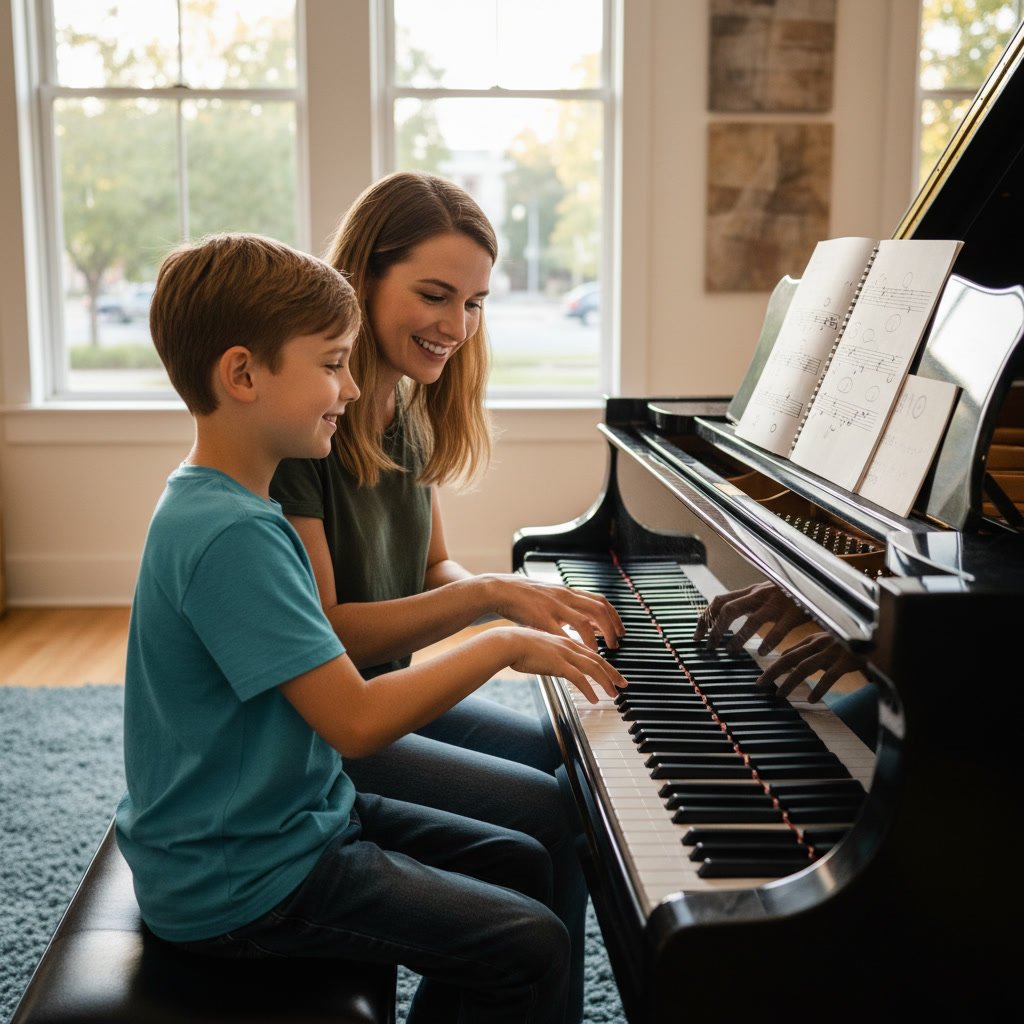
Understanding how piano lessons work is straightforward: most beginner sessions last 30 to 60 minutes and focus on foundational skills like hand position, reading basic notation, rhythm, and simple melodies. Your instructor assesses your current level, sets achievable goals, and builds a practice plan tailored to your pace and musical interests. Each lesson combines technique exercises, theory concepts, and repertoire so you develop well-rounded musicianship from day one.
Why Piano Remains the Most Popular First Instrument
The piano offers a visual layout that makes music theory easier to grasp than almost any other instrument. Every note sits in a clear, linear arrangement, which helps beginners understand intervals, chords, and scales without the added complexity of finger positions found on string or wind instruments. Parents often choose piano because it builds a foundation that transfers seamlessly to other instruments later.
Another advantage is immediate sound production. Unlike violin or clarinet, where tone quality takes weeks or months to develop, a piano key produces a clean note the moment you press it. This instant feedback keeps young learners motivated and reduces early frustration.
What Happens During Your First Session
Your initial meeting is part introduction, part assessment. The instructor will ask about your musical background, favorite genres, and any specific songs you hope to play. This conversation shapes the lesson plan and ensures the curriculum aligns with your personal goals rather than a rigid, one-size-fits-all method.
You will also cover basic posture and hand position. Proper bench height, curved fingers, and relaxed wrists prevent strain and build good habits that last a lifetime. Many teachers use simple five-finger patterns or single-note melodies during the first lesson so you leave with a small win and a clear sense of what practice looks like at home.
Step-by-Step Breakdown of a Typical Lesson
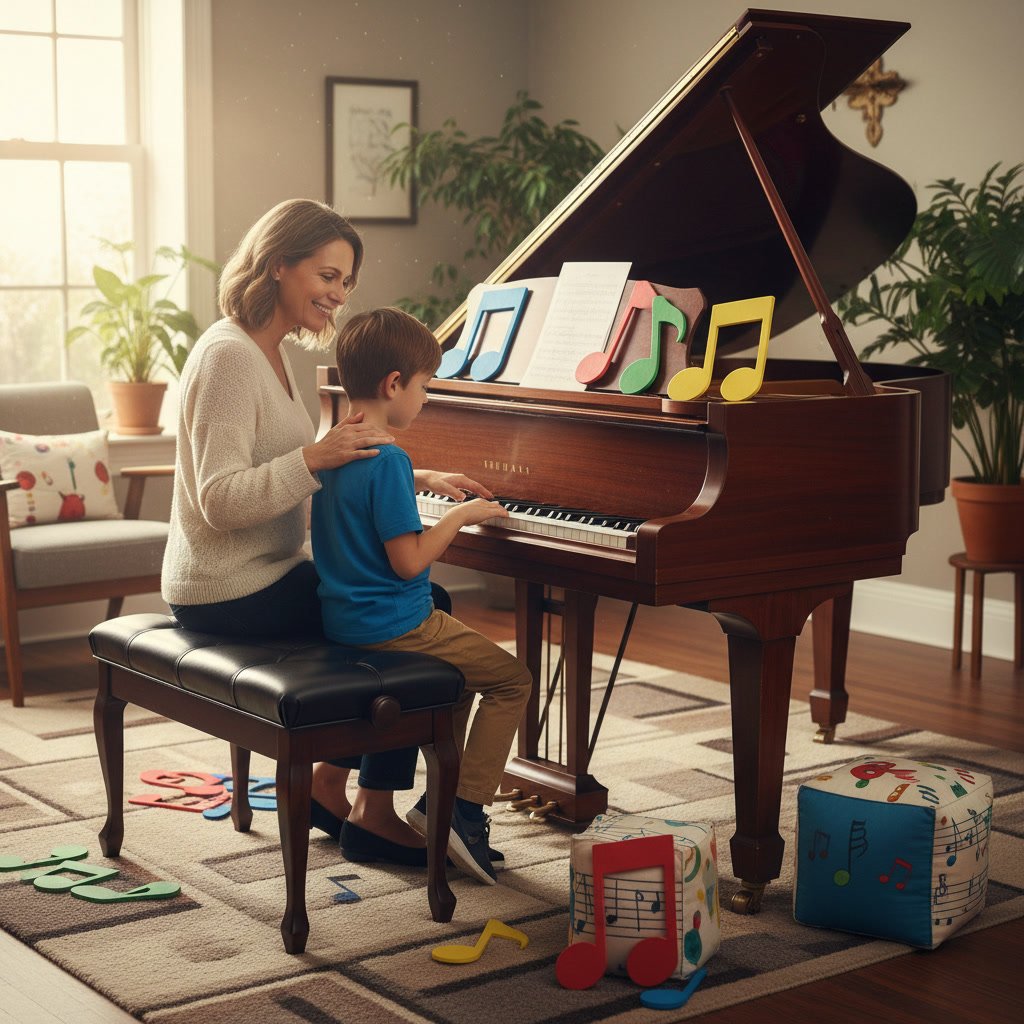
Most instructors follow a consistent structure that balances multiple skill areas. A standard session might look like this:
-
Warm-up and review (5 minutes): Scales, finger exercises, or a quick run-through of last week’s assignment to check retention.
-
Technique drills (10 minutes): Focused work on hand independence, dynamics, or articulation using etudes or targeted exercises.
-
Theory and sight-reading (10 minutes): Introduction of new concepts like note values, key signatures, or intervals, followed by reading unfamiliar music.
-
Repertoire (20 minutes): Learning new pieces or refining current songs, with attention to phrasing, tempo, and expression.
-
Assignment and questions (5 minutes): Clear practice instructions for the week ahead and time to ask about anything confusing.
This framework ensures steady progress across all dimensions of piano playing rather than drilling only songs or only scales.
How Practice Routines Accelerate Your Progress
Consistent practice matters more than marathon sessions. Research in motor learning shows that 20 to 30 minutes of focused practice six days a week outperforms sporadic two-hour cram sessions. Your brain needs time between repetitions to consolidate new motor patterns and musical concepts.
Effective practice begins with a warm-up, just like your lesson. Spend a few minutes on scales or simple finger exercises to activate muscle memory. Next, tackle the hardest sections of your assigned piece in small chunks, hands separately if needed. Finally, play through the entire piece to build continuity and confidence. This three-part structure mirrors how professional musicians prepare, scaled to your current level.
What Beginner Repertoire Looks Like
Modern piano methods introduce songs almost immediately, even if they use only a handful of notes. You might start with folk melodies like “Mary Had a Little Lamb” or “Hot Cross Buns,” then progress to simplified classical pieces by composers like Bach or Mozart within a few months. Many teachers also weave in pop, movie themes, or jazz standards to keep motivation high and show that piano skills apply to every genre.
Sheet music for beginners uses larger note heads, minimal ledger lines, and clear fingering suggestions. As you advance, the notation becomes more standard, and you learn to add your own fingerings based on hand size and comfort.
Piano Lessons in Winter Park for All Ages and Goals
Winter Park Music Academy designs piano lessons for students aged four through adulthood, which means the approach adapts to developmental stage and lifestyle. Young children often begin with game-based activities that teach rhythm and pitch recognition before formal notation. Adults, on the other hand, can handle more theory upfront and often progress faster in reading music, though finger dexterity may take longer to develop than it does for younger students.
The academy also offers in-studio, online, and in-home formats, giving families flexibility to match lesson style to their schedule. In-studio students at the Azalea Lane location appreciate the on-site playground, which keeps siblings entertained during lesson time.
How Long It Takes to Play Recognizable Songs
Most beginners can play simple melodies within the first month, assuming they practice consistently. Songs with a narrow range and repetitive patterns, like “Ode to Joy” or “Jingle Bells,” become accessible quickly. By the six-month mark, students who practice regularly often tackle pieces with two-hand coordination, basic chords, and dynamic contrast.
Progression speed varies widely based on age, practice habits, and prior musical exposure. A diligent adult learner might reach early intermediate repertoire in a year, while a young child building foundational skills may take 18 months to reach the same point. Patience and consistency matter far more than raw talent or speed.
Common Challenges and How Teachers Address Them
Hand independence ranks as the most frequent hurdle. Playing different rhythms or melodies with each hand feels unnatural at first because your brain wants both sides to mirror each other. Instructors break this barrier by isolating each hand, then slowly layering them together at a reduced tempo. Metronome work and specific exercises designed for coordination make this process systematic rather than frustrating.
Another common issue is sight-reading anxiety. Students often memorize pieces quickly and then avoid reading new music. Teachers counter this by assigning short, easy sight-reading exercises every week, building the habit of decoding notation in real time. Over time, this skill becomes automatic and opens the door to learning new music independently.
Expanding Your Skills with Complementary Lessons
Piano creates a strong foundation, but many students eventually explore other instruments to broaden their musicality. Guitar lessons pair naturally with piano because both involve chords and melody, while voice lessons help pianists develop phrasing and expression that carries back into their keyboard performance. Some academies offer bundled programs that let you study multiple instruments under one roof, streamlining scheduling and reinforcing cross-instrument concepts.
Students interested in composition or recording often add music production lessons once they have a few months of keyboard skills. Understanding how to layer tracks, adjust tempo, and mix sound gives pianists creative control over their musical ideas beyond traditional performance.
How Group Classes Compare to Private Instruction
Private lessons offer personalized pacing, immediate feedback, and a curriculum tailored to your specific strengths and weaknesses. Your instructor can spend extra time on a tricky passage or accelerate through concepts you grasp quickly. This one-on-one attention is especially valuable for beginners who need foundational habits corrected before they become ingrained.
Group classes, by contrast, provide peer motivation and ensemble experience. Playing alongside others teaches rhythm, listening skills, and the social aspects of music-making. Some schools blend both formats, pairing weekly private lessons with monthly group workshops or recitals. This hybrid model balances personalized instruction with community engagement.
Taking the Next Step Toward Musical Growth
Starting piano lessons opens a lifelong journey of creativity, discipline, and personal expression. The mechanics of lessons are simple: regular sessions with a qualified instructor, consistent home practice, and a willingness to tackle challenges one measure at a time. Progress unfolds in stages, each small victory building the skills and confidence needed for the next piece, the next technique, the next musical goal.
Winter Park Music Academy offers comprehensive instruction across every popular instrument, with flexible scheduling options designed for busy families. Whether you prefer in-studio sessions, online lessons, or in-home visits, the academy’s experienced instructors tailor each lesson to your pace and musical interests. Call (407) 622-9588 to schedule your first session and discover how structured, personalized piano instruction can transform your musical aspirations into tangible skills.
Leave a Reply