
Most beginners can play simple songs within three to six months of weekly piano lessons, while achieving intermediate proficiency typically takes two to three years with consistent practice. Advanced mastery requires five to ten years or more of dedicated study. The timeline depends heavily on your practice schedule, musical goals, and starting age.
Understanding Musical Milestones and Timelines
Piano learning isn’t a linear process with a fixed endpoint. Different students measure success in different ways. A seven-year-old learning their first recital piece celebrates a very different milestone than an adult mastering a Chopin nocturne. Setting realistic expectations from the start helps you stay motivated through the inevitable plateaus.
Your specific goals determine what “learning piano” actually means. Some students want to play pop songs by ear at parties. Others dream of performing classical repertoire in concert halls. Each path requires different skills and different amounts of time.
What Defines Each Skill Level
Beginner pianists typically spend their first year learning hand position, basic music reading, simple melodies, and foundational technique. You’ll recognize songs you’re playing and feel comfortable finding your way around the keyboard. Most beginners can perform easy arrangements of familiar tunes with both hands after six to twelve months of weekly lessons.
Intermediate players read music fluently in multiple keys, coordinate complex rhythms between hands, and tackle longer pieces with dynamic expression. This level usually represents two to four years of study. You’ll play recognizable versions of popular music, hymns, or simplified classical pieces with confidence.
Advanced students demonstrate technical mastery, musical interpretation, and the ability to learn challenging repertoire independently. Reaching this stage generally requires five to ten years of serious study, though some dedicated students progress faster with intensive practice schedules.
Practice Frequency Makes the Biggest Difference
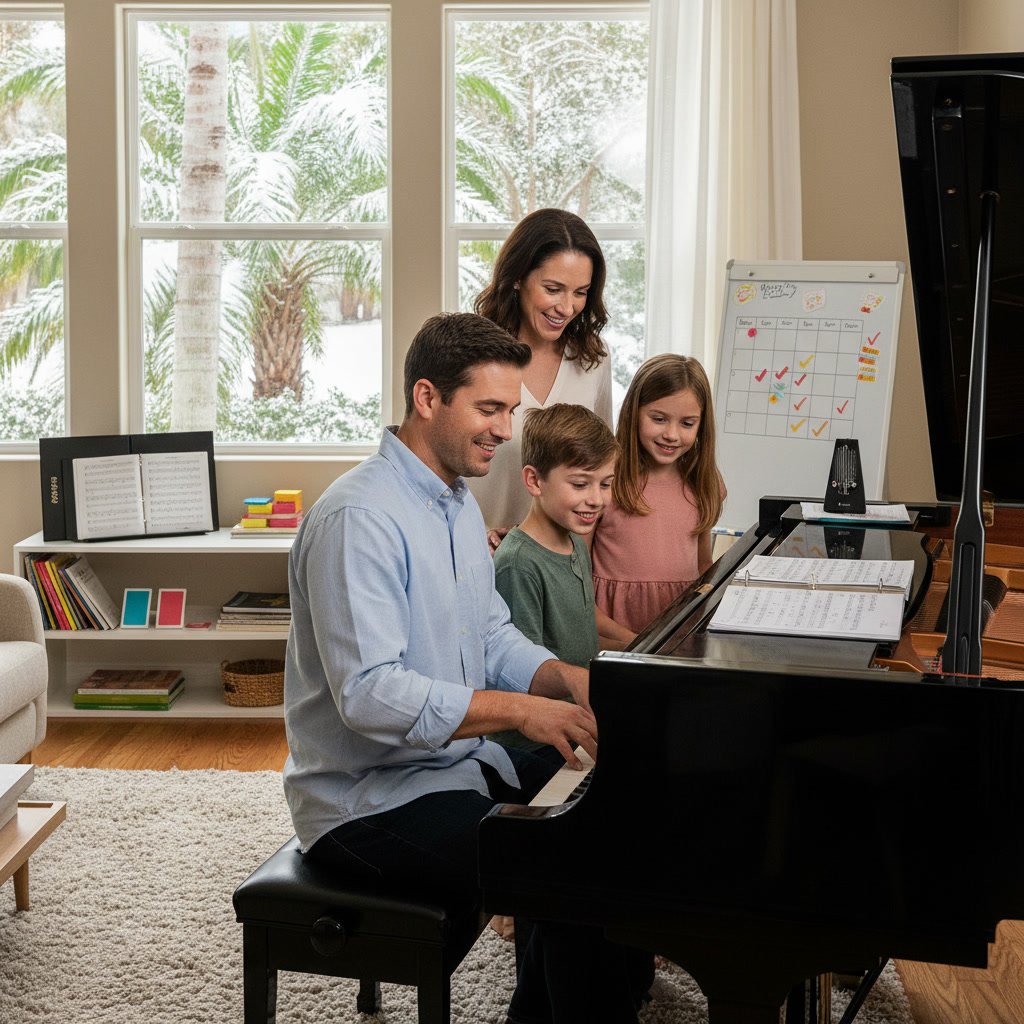
Weekly lessons provide structure and guidance, but daily practice drives actual progress. A student practicing 15 minutes per day will advance far more slowly than someone dedicating 45 minutes daily. The math is simple: over one year, 15 minutes daily totals about 91 hours, while 45 minutes reaches 274 hours of practice.
Quality matters as much as quantity. Focused practice on specific technical challenges builds skills faster than unfocused repetition. Students who practice with clear goals, work through difficult measures slowly, and apply their teacher’s feedback see dramatically better results than those simply running through pieces from start to finish.
Young children often benefit from multiple short practice sessions rather than one long block. Three 10-minute sessions throughout the day often yield better results for a six-year-old than a single 30-minute session where focus wanes.
Age and Prior Musical Experience
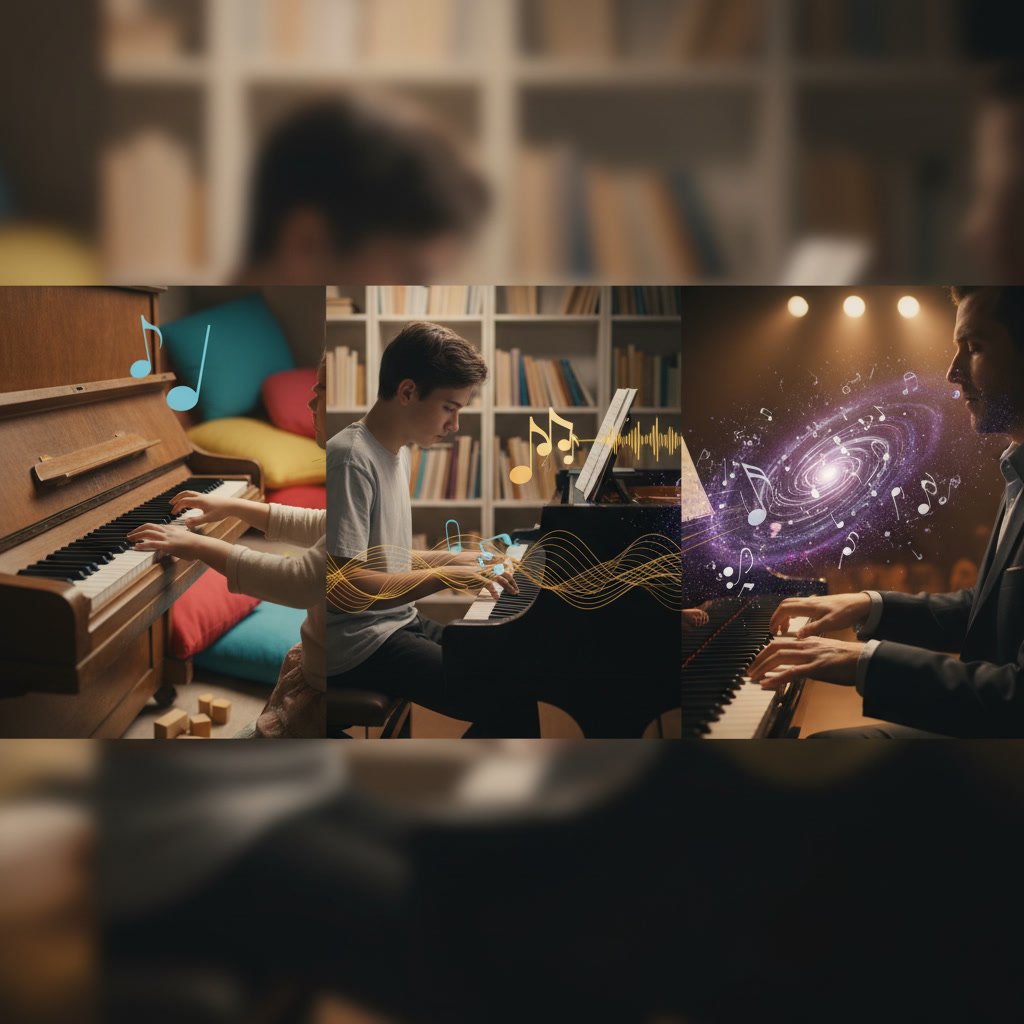
Adults and children learn piano differently, though both can become excellent musicians. Children’s developing brains absorb motor patterns and musical concepts naturally, but they have shorter attention spans and less self-discipline. Adults learn concepts faster and practice more efficiently but sometimes struggle with physical coordination and muscle memory.
Students with prior musical training on any instrument have significant advantages. A former clarinet player already reads music, understands rhythm, and has trained musical ears. These skills transfer directly to piano, cutting months or even years off the beginner phase.
Starting age matters less than most people think. Whether you’re seven or seventy, consistent practice and good instruction produce results. The readiness for lessons depends more on attention span and hand size than chronological age.
Winter Park Families See Faster Progress with Structured Programs
Students enrolled in comprehensive music programs with regular performance opportunities, theory integration, and consistent scheduling tend to progress 30 to 40 percent faster than those with sporadic lessons. Winter Park Music Academy structures lessons to build on previous weeks systematically, ensuring no gaps in foundational skills.
The combination of in-studio lessons, optional in-home instruction, and online flexibility means students miss fewer lessons due to scheduling conflicts. Continuity accelerates learning because the brain retains motor patterns better with regular reinforcement.
Access to multiple instructors specializing in different styles also speeds progress. A student interested in both classical technique and contemporary pop benefits from teachers who understand both worlds.
Timeline Breakdown by Common Goals
If your goal is playing simple melodies and chord progressions for personal enjoyment, expect three to six months of weekly lessons with daily practice. You’ll manage basic pop songs, simple hymns, and beginner classical pieces.
For intermediate repertoire like moderately difficult classical pieces, jazz standards, or complex pop arrangements, plan on two to three years. At this level, you’ll perform confidently at family gatherings and casual events.
Advanced classical repertoire, professional-level performance ability, or teaching credentials typically require seven to ten years of dedicated study. This includes developing sight-reading skills, music theory knowledge, and performance experience beyond just technical proficiency.
Functional piano skills for songwriting or music production can develop faster, sometimes within one to two years, because the focus is on chords and accompaniment patterns rather than classical technique and repertoire mastery.
Technical Foundations That Cannot Be Rushed
Proper hand position and posture form the foundation for everything else. Students who skip these fundamentals hit technical ceilings within a year or two and must relearn basic mechanics. Developing relaxed, efficient movement patterns takes months of mindful practice but prevents injury and enables advanced technique later.
Music reading fluency develops gradually and cannot be forced. The brain needs time to connect visual symbols on the page with physical movements and sounds. Students who rely too heavily on rote learning or YouTube tutorials often struggle to progress beyond intermediate levels because they never developed independent reading skills.
Rhythm accuracy and steady tempo control require neurological development that happens over months and years, not weeks. Young students especially need patient, systematic rhythm training that builds from simple quarter notes to complex syncopation.
Genre and Style Considerations
Classical piano training typically takes longer to reach performance readiness because the repertoire demands precise technique, dynamic control, and interpretive sophistication. A student aiming for Beethoven sonatas needs years of preparatory studies building specific skills.
Contemporary styles like pop, rock, and worship music often feel more accessible to beginners because chord-based accompaniment patterns create satisfying sounds quickly. Students can play recognizable versions of current hits within months, though true mastery still takes years.
Jazz piano presents unique challenges with improvisation, complex harmony, and rhythmic vocabulary. Most teachers recommend establishing solid classical foundations for two to three years before diving deep into jazz study, though students can explore basic jazz concepts much earlier.
Understanding how structured piano instruction works helps students appreciate why certain skills take time to develop properly.
Practice Habits That Accelerate Learning
The single most effective practice habit is starting each session with five to ten minutes of technical exercises: scales, arpeggios, or Hanon studies. This warmup prepares hands physically and mentally for the focused work ahead. Students who skip warmups take longer to achieve technical proficiency.
Breaking difficult passages into small sections and practicing them slowly with a metronome produces faster results than repeatedly playing through entire pieces at performance tempo. The brain learns patterns through slow, accurate repetition, then gradually increases speed as neural pathways strengthen.
Recording practice sessions and listening back reveals mistakes your ears miss while playing. This self-assessment skill separates students who plateau from those who continue improving. Many advanced students record themselves weekly to track progress and identify persistent problems.
Practicing away from the piano through mental rehearsal, listening to recordings, and studying scores develops musicianship that purely physical practice cannot. Professional pianists spend significant time on this cognitive work, and students can benefit from it at any level.
When Students Hit Progress Plateaus
Every piano student experiences periods where progress seems to stall. These plateaus often occur at predictable points: when transitioning from beginner to intermediate repertoire, when learning to read ledger lines fluently, or when attempting the first truly fast pieces.
Plateaus usually mean your brain is consolidating previously learned skills before the next leap forward. Pushing through with consistent practice rather than getting discouraged separates students who eventually achieve their goals from those who quit during temporary stalls.
Sometimes plateaus signal the need for fresh material or a different approach. A student stuck on classical etudes might reignite motivation by adding jazz or pop pieces to their rotation. Variety keeps practice engaging and develops well-rounded musicianship.
Setting Yourself Up for Success
Realistic expectations combined with consistent effort create the conditions for steady progress. Understanding that meaningful piano skills develop over years, not months, helps you celebrate small victories along the way rather than feeling frustrated by the distance still ahead.
The students who progress fastest share common traits: they practice almost daily, they apply teacher feedback carefully, they perform regularly for others, and they genuinely enjoy the process rather than fixating only on distant goals. Building these habits matters more than natural talent or perfect pitch.
Your timeline will be uniquely yours. Comparing yourself to other students creates unnecessary discouragement. Some people have more practice time available, different learning styles, or different goals. Focus on your own steady improvement rather than someone else’s pace.
Winter Park Music Academy offers piano instruction for students age four through adult, with flexible scheduling options that make consistent weekly lessons realistic even for busy families. Whether you’re exploring piano for the first time or returning after years away, structured instruction tailored to your goals and learning style makes the journey more enjoyable and efficient. Call (407) 622-9588 to discuss your musical goals and schedule your first lesson.
Leave a Reply