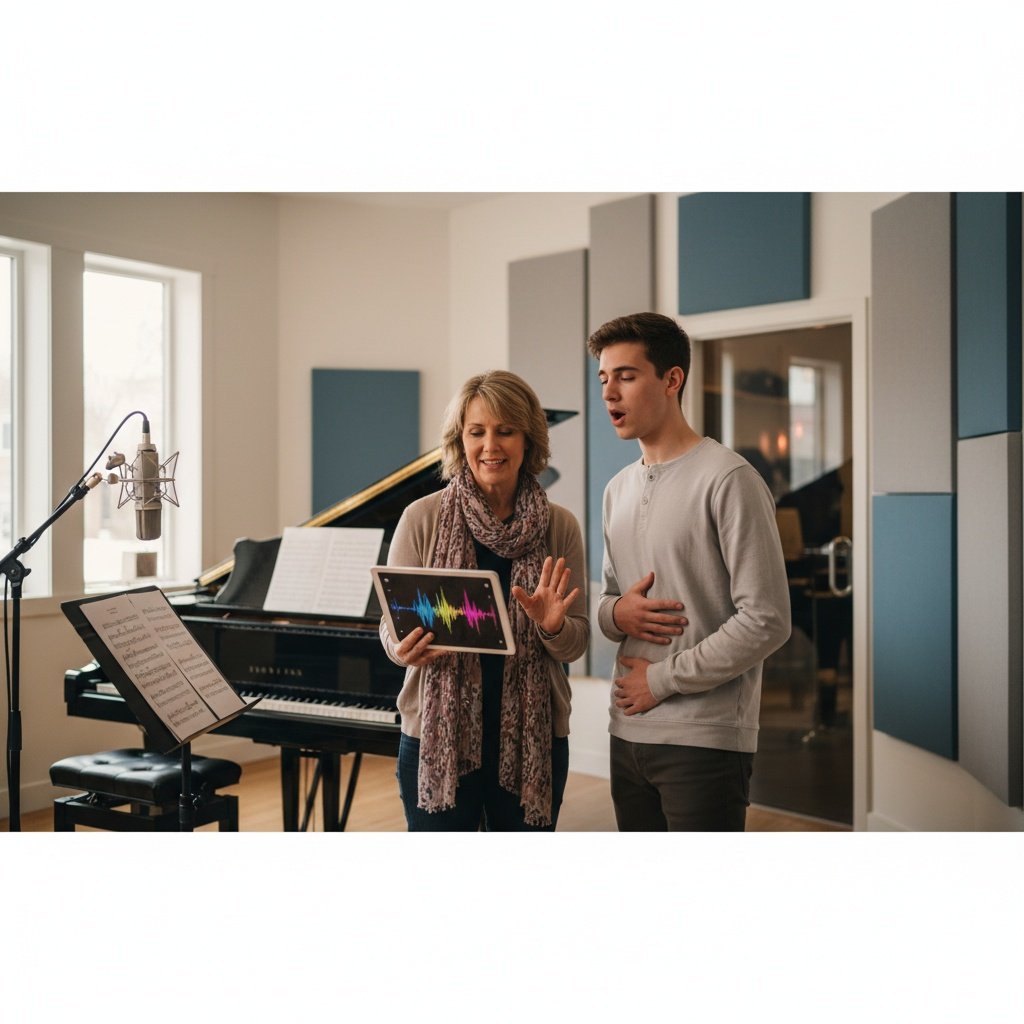
Voice lessons build pitch accuracy and tone control by training your ear to recognize correct pitches, strengthening the muscles that produce your voice, and teaching you how to shape resonance through proper breath support and vocal placement. Understanding how voice lessons work helps you see why consistent instruction produces measurable improvement in singers of all levels, from complete beginners to advanced performers preparing for auditions or recordings.
Why Pitch Accuracy Matters for Every Singer
Pitch accuracy determines whether your singing sounds in tune or off-key. When you sing a note, your vocal cords vibrate at a specific frequency. Hitting the correct pitch means controlling those vibrations precisely enough to match the target frequency. Even small deviations become obvious to listeners, especially when you sing with accompaniment or in harmony with other voices.
Trained ears can detect pitch variations as small as five cents, which is just five percent of a half-step. Developing this level of control takes deliberate practice with immediate feedback. Unlike instruments where you press a key or fret to produce a fixed pitch, your voice requires constant micro-adjustments of muscle tension, air pressure, and vocal cord positioning.
The Science Behind Tone Quality
Tone quality, also called timbre, comes from the unique combination of overtones your voice produces. Your vocal cords create the fundamental pitch, but the shape of your throat, mouth, and nasal cavities acts as a resonating chamber that amplifies certain frequencies while dampening others. Two singers can hit the exact same pitch but sound completely different because their vocal tracts shape the overtones differently.
Professional vocal instruction teaches you to manipulate these resonating spaces intentionally. You learn to adjust your soft palate, tongue position, jaw opening, and pharynx width to brighten or darken your tone, add warmth or edge, and project your voice without strain. These adjustments happen in millimeters, which is why visual demonstrations and hands-on guidance prove so valuable.

Ear Training Exercises That Build Pitch Recognition
Ear training forms the foundation of pitch accuracy. Before you can consistently sing the right note, you need to hear the difference between right and wrong. Instructors use interval training, where you practice singing the distance between two notes, starting with easy intervals like octaves and fifths, then progressing to more challenging ones like major sevenths or tritones.
Solfege exercises, using syllables like do-re-mi-fa-sol, create mental anchors for each scale degree. When you associate a specific syllable with a specific pitch relationship, you develop relative pitch, the ability to sing any note accurately once you know your starting point. Advanced students often practice pitch-matching exercises where the teacher plays or sings a note and the student must replicate it immediately, refining their ability to make instant micro-corrections.
Breathing Techniques That Support Consistent Tone
Breath support directly affects both pitch stability and tone quality. When you run out of air mid-phrase, your pitch tends to drop and your tone becomes thin or strained. Diaphragmatic breathing, where you expand your lower abdomen and ribs rather than lifting your shoulders, provides a steady, controlled airflow that keeps your pitch locked and your tone rich.
Professional singers often practice breath management exercises separately from singing. Sustained hissing sounds on a slow count build endurance. Quick breath catches between phrases teach efficient air intake. Straw phonation exercises, where you sing through a narrow straw, create back-pressure that helps you find optimal vocal cord closure without tension. These mechanical skills free you to focus on musical expression once they become automatic.
Vocal Warm-Ups Designed for Pitch and Tone Development
Structured warm-ups prepare your voice for accurate singing while gradually expanding your comfortable range. Lip trills and tongue trills reduce tension while gently stretching your vocal cords. Sirens that glide smoothly from low to high notes train the muscles that adjust pitch to work continuously rather than in steps.
Scale patterns, especially those that move through your break points between vocal registers, teach you to smooth out sudden quality changes. A five-note scale starting on middle C might feel easy, but the same pattern starting two steps higher forces you to blend your chest and head voice. Repetition at different starting pitches builds muscle memory for consistent tone across your entire range.
Real-Time Feedback Methods in Voice Instruction
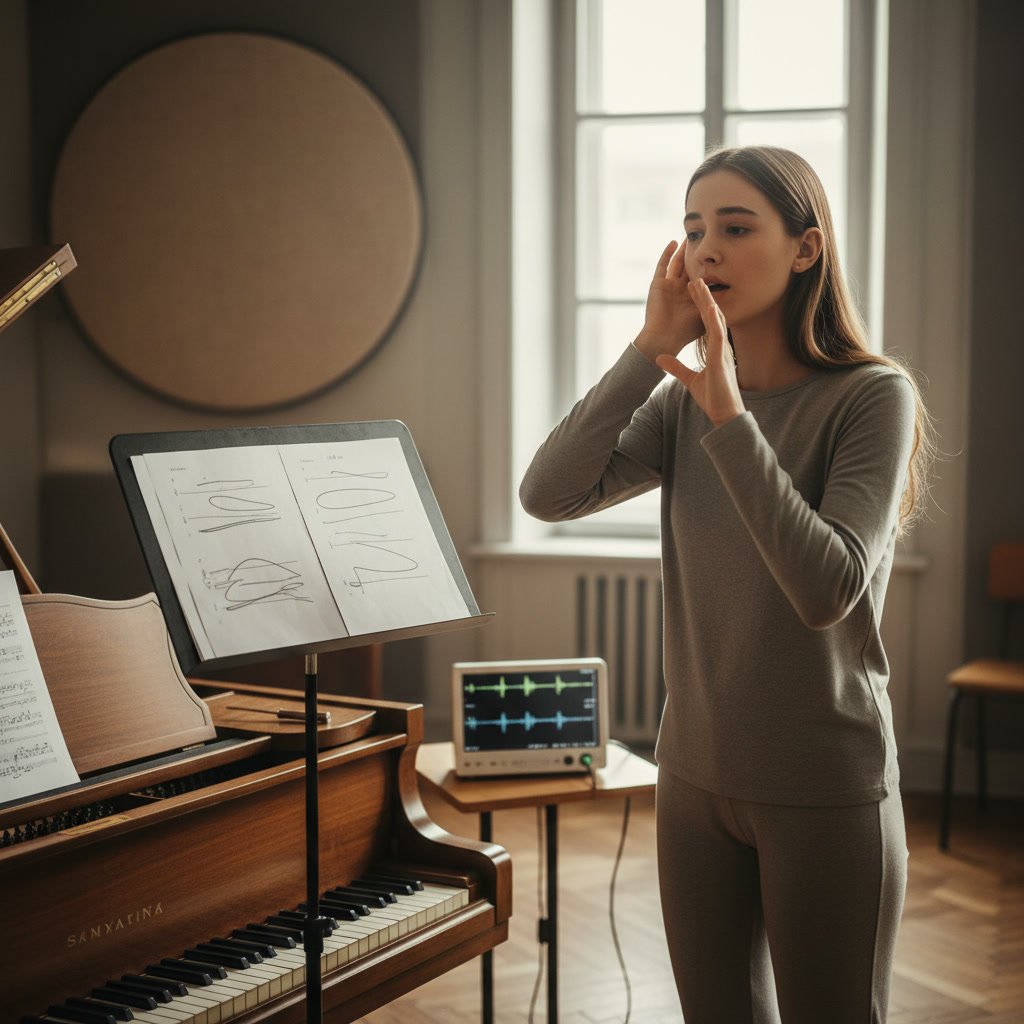
Immediate correction accelerates improvement more than any other single factor. When a teacher stops you the instant you go sharp or flat, you learn to feel the difference in your body. That physical sensation becomes your internal reference point. Many instructors use piano accompaniment to provide constant pitch reference, while others employ digital tuners that display your pitch accuracy visually.
Recording yourself during lessons reveals patterns you cannot hear while singing. You might consistently go flat on descending intervals or lose resonance on vowels that require more space. Video recordings capture posture problems, jaw tension, or breathing irregularities that affect your sound. This objective documentation shows concrete progress over weeks and months.
Voice Lessons at Winter Park Music Academy
Students in Winter Park benefit from personalized instruction that addresses their specific vocal challenges and goals. Winter Park Music Academy offers voice lessons for ages four to adult, accommodating everyone from children exploring their first musical experiences to adults preparing for performances or simply wanting to sing more confidently.
Flexible scheduling options include in-studio sessions at the Azalea Lane location, online lessons for remote learners, and in-home instruction for maximum convenience. This variety ensures consistent progress regardless of your schedule or learning preference. Just as students discover when exploring structured instrumental instruction, regular weekly practice with expert guidance produces measurable results.
Comparing Group Classes and Private Voice Instruction
Private lessons provide individualized attention that group settings cannot match. Your instructor tailors every exercise to your current ability, identifies your unique tension patterns, and adjusts the pace to your learning speed. You receive immediate correction on every phrase, maximizing the value of your practice time.
Group vocal classes offer different benefits. Singing with others trains your ear to hold your part against harmony lines. You learn from hearing other students receive corrections. The social element reduces performance anxiety and builds confidence. Many serious students combine both formats, taking private lessons as their primary instruction while joining ensemble groups for practical application and motivation.
The choice often mirrors decisions in other musical disciplines. Parents wondering about readiness indicators for young musicians face similar considerations about individual attention versus peer learning.

Practice Strategies Between Weekly Lessons
Daily practice, even in short 15-minute sessions, builds muscle memory faster than cramming before your next lesson. Start every practice with the same warm-up sequence your teacher assigned. Consistency trains your voice to engage correctly from the first note.
Record yourself practicing the specific exercises and songs from your lesson. Compare your recordings to your teacher’s demonstrations. Focus on one technical element per practice session rather than trying to fix everything at once. Monday might emphasize breath support, Wednesday could focus on vowel shapes, and Friday might work on pitch accuracy in a challenging passage.
Professional singers often practice technical exercises separately from songs. Spend half your time on scales, intervals, and tone-building drills, then apply those skills to actual music. This separation lets you isolate problems without the distraction of lyrics, rhythm, and musical interpretation.
Common Obstacles to Pitch and Tone Development
Physical tension blocks progress more than any lack of talent. Jaw clenching, tongue retraction, neck stiffness, and shoulder lifting all interfere with free, resonant tone production. Your instructor will identify these habits through observation and help you replace them with relaxed, efficient movements.
Hearing yourself accurately presents another challenge. The sound you hear while singing travels through the bones of your skull, emphasizing bass frequencies and obscuring overtones that listeners hear. This internal perception makes it difficult to judge your own tone quality or pitch accuracy without external feedback from recordings or your teacher.
Inconsistent practice schedules prevent the gradual conditioning your voice needs. Unlike sudden injury, irregular practice causes slow regression. You lose the fine motor control and muscle coordination you built in previous weeks. Setting a fixed practice time each day, even if brief, produces better results than occasional longer sessions.
Building a Foundation for Lifelong Vocal Health
Quality voice instruction protects your vocal health while expanding your abilities. Proper technique prevents the nodules, polyps, and chronic strain that result from forcing your voice beyond its current capacity. Learning to recognize early warning signs of fatigue, such as raspiness, reduced range, or throat discomfort, helps you avoid injury.
Your voice changes throughout your life due to hormones, aging, and general health. Skilled instruction adapts to these changes, teaching you modified techniques that work with your voice rather than against it. Singers who study with qualified teachers often maintain strong, flexible voices well into their senior years, while self-taught singers frequently develop limitations or damage that could have been prevented.
Winter Park Music Academy provides expert vocal instruction that builds both technical skill and healthy habits for sustainable improvement. Whether you want to sing professionally, perform in community theater, lead worship, or simply enjoy making music, structured lessons give you the tools to reach your goals safely and efficiently.
Ready to develop pitch accuracy and tone control with personalized vocal coaching? Call (407) 622-9588 to schedule your first lesson and experience the difference that expert instruction makes in your singing.
Leave a Reply