
Understanding how guitar lessons work helps beginners walk into their first session confident and prepared. Guitar instruction typically begins with proper posture, hand positioning, and basic chord shapes, then progresses through strumming patterns, note reading, and song repertoire tailored to your goals. Most students attend weekly 30- or 60-minute sessions with a dedicated instructor who builds a curriculum around your pace, musical interests, and skill development.
Why Structured Instruction Matters for New Guitarists
Teaching yourself guitar from online videos can work for highly self-motivated learners, but most beginners benefit enormously from professional guidance. An experienced instructor spots and corrects bad habits before they become ingrained, explains concepts in multiple ways until they click, and keeps you accountable to steady practice.
Structured lessons also prevent the overwhelm that comes from not knowing what to learn next. Your teacher sequences skills logically, building each new technique on the foundation of the last. This systematic approach means you spend less time confused and more time actually playing music.
What Happens During Your First Guitar Lesson
Your initial session focuses on assessment and orientation. The instructor evaluates your current skill level, whether you’re a true beginner or someone returning after years away. You discuss musical goals, favorite artists, and genres that excite you, because this information shapes your entire learning path.
The teacher introduces you to the parts of the guitar, proper sitting or standing posture, and how to hold the instrument without tension. You learn how to tune the guitar and understand why accurate tuning matters for ear development. Many instructors also cover basic pick technique or fingerstyle positioning during this first meeting.
By the end of lesson one, most students play a simple chord or melodic pattern. This immediate success builds confidence and proves that making music is within reach, even on day one.

The Building Blocks Taught in Early Lessons
After the introduction, the next several lessons establish foundational skills. You typically learn three to five open chords such as G, C, D, Em, and A minor. These shapes unlock hundreds of popular songs and give you the muscle memory needed for smooth chord transitions.
Strumming patterns come next, starting with simple downstrokes and progressing to combinations of down and upstrokes. Rhythm is half the battle in guitar playing, so instructors spend considerable time helping you internalize steady timing and develop independence between your strumming hand and fretting hand.
Many teachers introduce tablature (tab) notation early on. Tab is simpler than standard music notation and shows you exactly where to place your fingers on the fretboard. This visual system helps beginners learn songs quickly while they develop their ear and eventually tackle traditional sheet music.
How Lessons Adapt to Your Learning Style in Winter Park
Quality guitar instruction recognizes that every student absorbs information differently. Some learners need visual demonstrations, others respond better to verbal explanations or hands-on experimentation. A skilled teacher observes how you process new concepts and adjusts their teaching methods accordingly.
Age also influences lesson structure. Young children benefit from shorter attention spans accommodated through game-like exercises and frequent activity changes. Adult beginners often prefer understanding the theory behind techniques and appreciate knowing why a particular fingering or approach works best.
The flexibility to offer in-studio, online, or in-home lessons means you can choose the environment where you focus best and fit music education into your schedule without friction.
Typical Lesson Formats and Session Length
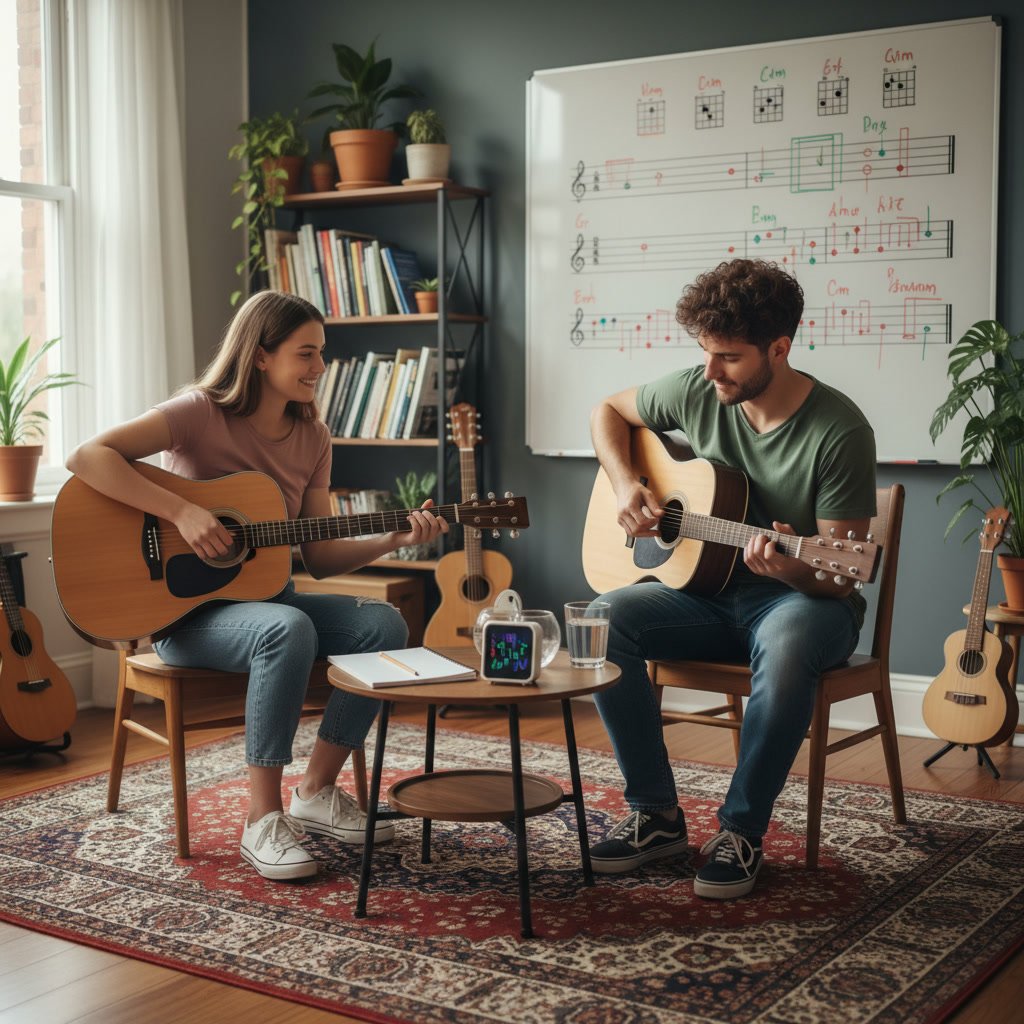
Most beginners start with 30-minute weekly lessons. This duration provides enough time to review homework, introduce one or two new concepts, and practice them together without causing fatigue or information overload. As students advance and their attention spans grow, many transition to 60-minute sessions that allow deeper exploration of songs, theory, and technique.
A standard lesson follows a predictable rhythm. The first five to ten minutes involve warmup exercises and review of material from the previous week. The middle section introduces new skills or songs. The final portion focuses on practice strategies and assigns specific homework for the coming week.
Consistency matters more than intensity. A student who practices 15 minutes daily will progress faster than someone who crams an hour the night before their lesson. Instructors emphasize building sustainable practice habits from the very beginning.
The Role of Practice Between Sessions
Lessons provide the roadmap, but practice drives progress. Your instructor assigns specific exercises, chord changes, or song sections to work on each week. These assignments are calibrated to challenge you without overwhelming you, sitting in that productive zone where effort leads to growth.
Effective practice means quality over quantity, especially for beginners. Ten focused minutes where you concentrate on clean chord transitions beats 30 distracted minutes of mindless repetition. Teachers often recommend practicing in short, frequent sessions rather than one long marathon, because motor skills develop better with spaced repetition.
If you find yourself stuck on something between lessons, most instructors encourage questions via text or email. A quick video clarifying a tricky finger position can prevent a week of practicing something incorrectly. Much like recognizing when a practice routine needs adjustment, guitar students benefit from honest self-assessment about what’s working.
When You Start Playing Actual Songs
One of the most motivating milestones is playing your first complete song. This usually happens within the first month for most students. Teachers select beginner-friendly songs with two or three chords and simple strumming patterns, often pulling from your stated musical interests.
Playing real music, even simplified versions, reinforces why you started lessons in the first place. It shifts practice from abstract exercises to tangible musical expression. As your chord vocabulary and strumming repertoire expand, so does the catalog of songs within your reach.
Advanced beginners eventually learn barre chords, which unlock every chord in every key. This technique requires hand strength and coordination that takes time to develop, but it represents a major turning point in your capabilities as a guitarist.
How Progress is Measured and Tracked
Guitar advancement is not always linear. Some weeks you’ll experience breakthroughs, others feel like plateaus. Experienced teachers track progress through multiple lenses: technical proficiency, repertoire size, music theory knowledge, and most importantly, your confidence and enjoyment.
Many instructors use informal assessments or checkpoints where they evaluate your readiness to move to the next level of material. These are not stressful tests but rather opportunities to celebrate what you’ve mastered and identify areas needing more attention.
Some students progress faster than others based on practice time, prior musical experience, natural aptitude, and personal goals. Teachers adjust pacing to each individual rather than forcing everyone through an identical curriculum at the same speed.

The Difference Between Group Classes and Private Lessons
Private one-on-one instruction offers the most personalized attention and fastest progress for most beginners. Your teacher tailors every minute to your specific needs, answers your unique questions, and adapts pacing to your learning speed. This individualized approach is especially valuable when developing proper technique from day one.
Group classes provide social motivation and cost savings. Learning alongside peers can be encouraging, and some students thrive on the gentle competition and camaraderie. However, group settings mean less individual feedback and a standardized curriculum that may not align perfectly with your interests or pace.
The choice depends on your learning preferences, budget, and goals. Many students find that private lessons create the strongest foundation, similar to how personalized piano instruction adapts to individual needs across different instruments.
Common Challenges and How Instructors Address Them
Nearly every beginner faces sore fingertips in the first few weeks. The discomfort is temporary as calluses develop, and instructors help you manage it by recommending appropriate practice durations and proper pressure techniques. Pushing through moderate discomfort is normal, but sharp pain signals incorrect positioning that needs correction.
Chord transitions frustrate many new players. Fingers seem slow and clumsy, and clean sound feels impossible. Teachers break transitions into micro-movements, practicing the shift between just two chords until muscle memory develops. They also teach you to look ahead in the music, preparing your fingers for the next chord before you need to play it.
Rhythm and timing challenges are addressed through counting aloud, using a metronome, and playing along with recordings. Developing your internal sense of pulse takes time but transforms your playing from hesitant to confident. Instructors provide specific exercises that isolate rhythm from other technical demands.
Starting Your Guitar Journey With the Right Foundation
Beginning guitar with professional instruction sets you up for years of musical enjoyment. You avoid the frustration of self-teaching pitfalls, develop proper technique that prevents injury, and progress systematically toward your musical goals. The combination of expert guidance and consistent practice turns what feels impossible on day one into second nature within months.
Finding an instructor who matches your learning style, musical interests, and scheduling needs makes the difference between sporadic attempts and sustained progress. The right teacher celebrates your wins, problem-solves your challenges, and keeps you motivated through the inevitable plateaus every musician encounters.
Winter Park Music Academy offers comprehensive guitar lessons for complete beginners through advanced players, with flexible scheduling options including in-studio, online, and in-home instruction. Whether you’re four or 84, our experienced instructors build custom lesson plans around your goals and guide you from your first chord to your first performance. Call (407) 622-9588 to schedule your introductory session and discover why families across Winter Park choose us for their music education.
Leave a Reply